

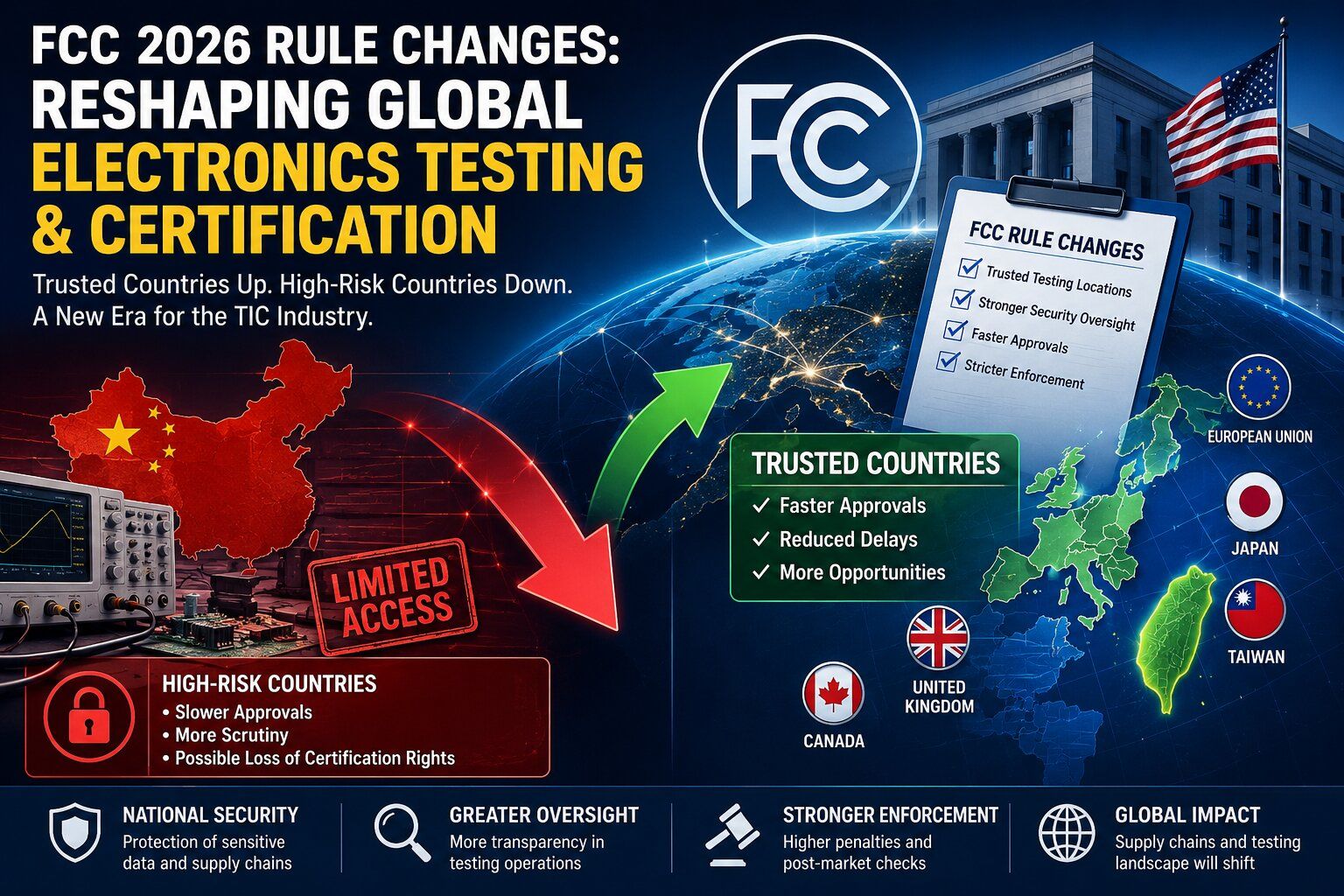
The FCC’s 2026 rule changes are set to reshape the global electronics testing and certification industry. By prioritizing trusted-country testing locations and tightening security oversight, the FCC is shifting approvals away from high-risk regions and toward partners such as Taiwan. The changes could significantly impact global supply chains, compliance strategies, and the future of the TIC industry.
What’s Changing?
The FCC’s April 30 decision introduced two major changes. First, it proposed stopping the use of testing labs in countries that do not have agreements with the United States. These agreements are called Mutual Recognition Agreements, or MRAs. They allow countries to accept each other’s testing results. Second, the FCC created a faster approval system for devices tested in the U.S. or in countries with these agreements.
When the proposal becomes final, test labs in countries without MRAs could lose the ability to handle products for the U.S. market within two years. At the same time, devices tested in trusted locations will move through approval more quickly. This change could reshape global supply chains because companies will have to rethink where they test their products before selling them in the United States.
Countries with MRAs Will Get Immediate Benefits
Countries that already have agreements with the United States are likely to benefit. These include Japan, many countries in the European Union, the United Kingdom, Canada and Taiwan. Because their test labs are considered trusted, companies will choose these locations to get faster approvals. This could lead to growth in their testing industries and more investment in testing facilities.
FCC Saw Real Security Threats
The FCC believes the old system had serious risks. Testing labs often get early access to new product designs, technical data, and sensitive information. If a lab is not trustworthy, this information could be stolen or shared. This could harm companies and create security risks.
Another concern is enforcement. Many labs are located outside the United States. This makes it difficult for regulators to take action when problems occur. Legal processes can be slow or ineffective across borders. This weakens the system and reduces accountability.
There is also the issue of scale. Once a product is FCC approved, it can be sold across the United States. If something is wrong with that product, it could affect millions of devices. This makes the testing process a critical point of control.
Because of these risks, the FCC decided that stronger rules were needed. The new system focuses on trusted locations, better oversight, and stronger enforcement. The goal is to protect supply chains, improve reliability, and reduce national security risks.
A Major TIC Industry Shift
The TIC industry as a whole is going through a major shift. In the past, companies focused on cost, speed, and flexibility. Testing could be done almost anywhere in the world. Now the focus is changing. Trust, security, and political relationships are becoming more important.
This might lead to a more divided global system. Different regions may follow different rules. Companies may need to test the same product in more than one place to meet different requirements. This could increase costs and complexity, but it may also improve security and reliability.
Older Rules for New Technology
The FCC says this policy is similar to how things worked before 2015. At that time, most testing had to be done in the U.S. or in trusted partner countries. However, the new system is more advanced and more controlled. It includes better tracking of testing data, lists of companies that are not allowed to participate, and new ways for people to report problems. It also includes stronger enforcement tools. This means the FCC is not just going back to older rules. It is building a tighter system that is designed for today’s technology.
The new rules divide testing labs into two groups. Trusted labs are located in the United States or in countries with agreements. These labs will get faster approvals and face fewer delays. Labs in countries without agreements will face slower approvals and more review. Some may lose their approval rights altogether. For companies, this is a big change. In the past, they often chose testing labs based on cost or convenience. Now they must also think about whether the lab is located in a trusted country.
Now Where You Test Matters as Much as How
This shift will likely move testing work around the world. Companies that want fast approval in the U.S. will choose labs in approved locations. This could increase demand for testing services in certain countries while reducing it in others. Over time, the global map of testing could change in a major way.
The FCC is also adding new rules for testing companies. Labs must now report where their employees or contractors are located and who is involved in testing and certification. They must follow stricter oversight rules. This helps the FCC understand whether labs are independent and free from outside influence. The goal is to make sure testing results are honest and reliable.
The FCC is also increasing enforcement. There will be more checks on products after they are sold. There will be larger penalties for mistakes or false reports. There are also new ways for people in the industry to report suspicious activity. This means testing companies now have more responsibility. If they make errors or break rules, the consequences will be more serious than before.
Taiwan Up, China Down
China has been a major testing center for many years. It has advantages such as being close to factories, offering lower costs, and handling large volumes of testing. These strengths helped it become a key part of the global TIC industry.
Despite these past advantages, China is expected to be the most affected by these changes. When the new rules are finalized, many Chinese testing labs could lose the ability to test and certify products for the U.S. market. The FCC has already removed more than twenty labs that it considers risky. This signals a clear direction for future policy.
The rule changes put Taiwan in a strong position. It has a powerful electronics manufacturing sector and strong technology capabilities. It also has a close relationship with the United States. Taiwan participates in the APEC TEL MRA under the designation ‘Chinese Taipei,’ positioning it well to benefit from the FCC’s growing preference for trusted-country testing. The arrangement recognizes both Taiwan telecommunications testing laboratories and equipment certifications. In the end, this makes Taiwan even more attractive as a major hub for testing products to be sold in the United States. Especially as an alternative to China.
Trust is Paramount
The FCC’s 2026 changes are not small updates. They represent a major shift in how electronic devices are tested and approved worldwide. China may lose access to the U.S. certification system. Taiwan will seize this opportunity due to its strong agreements. For the TIC industry, the message is clear. It is no longer just about doing the job well. It is about being trusted to do it.
If you could use a trusted partner to help navigate your product through the TIC landscape, contact us at IoT Consulting Partners. We already have an office in Taiwan and existing relationships with its best labs and Telecommunications Certification Bodies (TCBs), so we’re perfectly positioned to lead you straight to success. And with over 20 years experience in the TIC Industry, we’re experts on the latest developments as well as what’s likely to come in the near future.