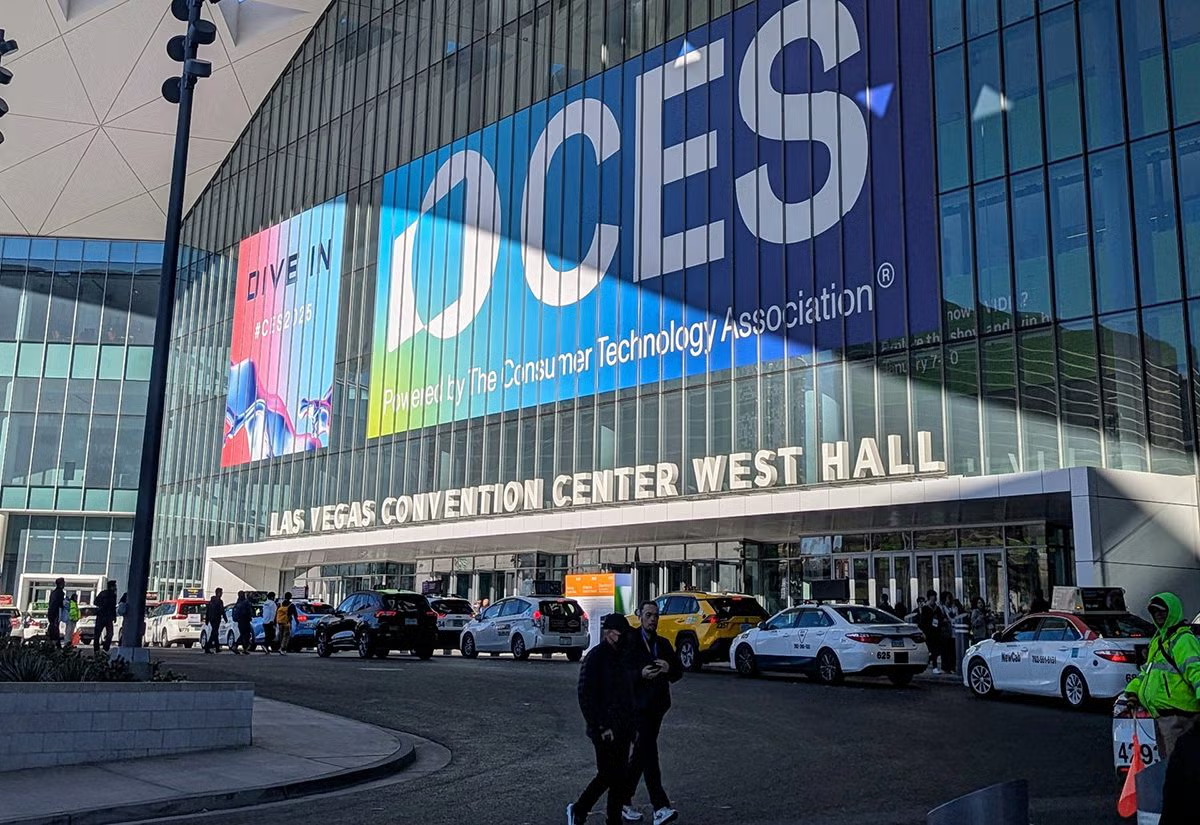
Compliance by Design Can Drive Your Success.
After countless roadblocks and last-minute issues, your new tech product is finally ready. You’ve invested heavily to exhibit at CES, prepared every datasheet and marketing asset, and anticipated every question a retailer might throw your way. Then it happens. A promising retail conversation turns into a deal-breaker when they ask a simple question: “Does your product meet WiFi and radio compliance requirements in our region?” And suddenly, it doesn’t, because compliance wasn’t integrated early enough in development.
The opposite of treating compliance as a final testing hurdle, “Compliance by Design” is the engineering philosophy that considers and integrates regulatory requirements and best practices into the very first stages of product development. This proactive approach ensures your device operates efficiently within its designated radio spectrum without harmful interference to other systems while meeting essential health and safety standards.
AI Has Shifted From a Feature to the Default Standard
AI has gone from a feature to a default expectation in virtually every aspect of technology. Smart home systems, wearables, health devices, robotics, EV accessories, mobility, security cameras, AR/VR gear, and enterprise edge devices all employ it. Behind this innovation, regulatory and compliance pressure points will immediately confront global manufacturers.
Stay Out of the Gaps
CES exhibitors like you need to bring products configured for multiple regions and avoid region-specific compliance gaps. This includes different 6 GHz rules (LPI/SPI/VLP/standard power), inconsistent DFS/LBT/coexistence implementations, regional power caps and channel-availability differences.
Devices that work flawlessly at CES in Las Vegas may fail CE RED, ANATEL, MIC Japan, Korea RRA, or Taiwan NCC due to different Wi-Fi 6E/7 coexistence protocols and power masks. This can lead to setbacks and obstacles like failed certification cycles, forced firmware changes, antenna redesign and release delays. This can ultimately derail your product and poison your relationships with potential retail and distribution partners.
Proper “Compliance by Design” avoids those issues because you’ll ship region- specific firmware, not one global build and validate 6 GHz behavior across all target markets.
Keep Your Edges Clean
AI-powered devices, especially wearables, home robots, smart health monitors, and XR gear with real-time inference dependent on clean radio conditions. So radio noise, EMC stability, & coexistence are critical for AI edge devices. Many will work fine in a controlled booth demo. But in real markets, EMC emission leaks, poor reception sensitivity and aggressive power bursts can lead to significant problems. Resulting issues like dropped connections, high latency and failure of multimodal sync all run afoul of EMC immunity requirements, coexistence protocols and interference reporting. A compliance by design approach means handling these issues by testing early rather than confronting them as a late stage fix.
Avoid Wireless Radio Collisions
The collision of the EU’s RED Delegated Act with AI products using wireless radios could be the biggest regulatory earthquake of CES 2026. The EU’s unwavering commitment to NIS2, RED and the CRA creates mandatory requirements for safety and security. Radio interface design, vulnerability management, documenting risk assessment and lifecycle support timelines are all quite capable of crushing the future of a non-compliant tech product.
Considering compliance by design means you’ll have security documentation before EU market entry. You’ll also want to keep a clear and up-to-date Software Bill of Materials (SBOM) lineage for your AI firmware models. All of this is best accomplished during R&D, not initiated because of your failed CES 2026 product launch.
The FCC is Likely to Tighten RF Requirements
The FCC is already exploring stricter RF requirements. RF exposure clarifications, labeling rules for IoT security and interference accountability for multi-radio products. These are all in their sights with new changes likely on the horizon.
With hundreds of AI devices hitting the market at CES 2026, you can expect more multi-radio coexistence testing, closer attention to UNII 5-8’s additional spectrum, pressure on UWB and radar-based sensing, and strict documentation demands for AI-modified transmit characteristics. And, if your product includes AI-enhanced radios that adjust parameters dynamically, you should get ready to add provable, predictable compliance behavior to your FCC filings.
Steer Clear of Post-CES Global Certification Bottlenecks
Every year, CES launches a wave of post-show certification scrambles. But CES 2026 is likely to bring an unprecedented tsunami. With WiFi7, UWB adoption, low-power radar, satellite-connected IoT and multi-radio edge devices, global test labs and certification bodies will surely be overwhelmed.
You could easily end up in a worldwide traffic jam of longer test cycles and extended booking times and regulatory confusion brought on by AI-driven adaptive behavior especially for devices whose RF characteristics change depending on AI inference. If you don’t freeze RF firmware early and book pre-planned test slots, you could face months of delay.
Stay Ahead of the Curve
Manufacturers who treat compliance as an R&D input rather than a last-minute checkbox will launch on time and avoid major crashes, fender benders and traffic jams along the way. It starts with a clear understanding of your target markets and their specific regulatory bodies. Augmented by careful component selection, choose pre-certified components whenever possible. And throughout your product development journey, conduct pre-compliance testing to catch and correct potential issues early and avoid costly redesigns and delays.
Help is Right Around the Corner
It’s not too late to seek assistance from an experienced, qualified compliance consultant. With 20+ years of experience in product design, manufacturing, compliance testing (Wireless, EMC, Safety), inspection, and certification, IoT Consulting Partners delivers proven expertise. Reach out to us now, before CES, or contact us to arrange a chat onsite during the show.